Canterbury-Bankstown Arborist Report Case Studies
Actual arboricultural assessments across Canterbury-Bankstown, completed for residential development, larger development sites, infrastructure projects, tree-risk investigations and construction near established trees.
- AQF Level 5 Consulting Arborists
- 32+ years arboricultural experience
- Canterbury-Bankstown LGA
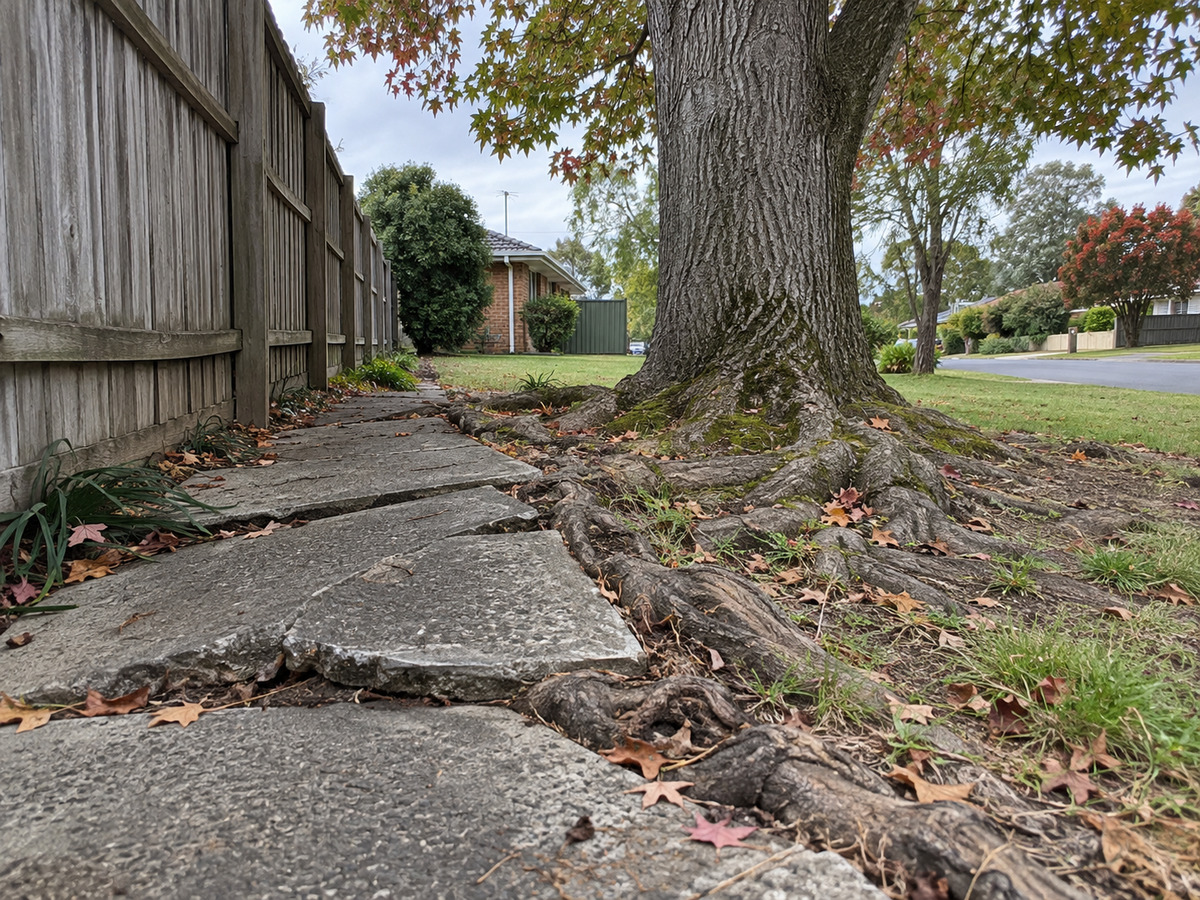
Assessments completed across the Canterbury-Bankstown LGA
The case studies below show the type of work undertaken across Belmore, Canterbury, Panania, Padstow Heights, Villawood, Revesby and Picnic Point. They demonstrate how tree retention, development impacts, Tree Protection Zones, Structural Root Zones, tree condition and construction constraints are assessed on actual sites.
27 trees assessed across a multi-lot development site
A substantial development site in Belmore required an Arboricultural Impact Assessment covering 27 trees. The assessment considered each tree's species, dimensions, condition, retention value, Tree Protection Zone, Structural Root Zone and the extent of development encroachment.
Rather than treating every tree in the same way, the assessment identified trees capable of retention as well as trees significantly affected by the proposed development. The project incorporated an Arboricultural Impact Assessment and Tree Protection Plan, allowing the relationship between the proposed development, retained trees and construction footprint to be clearly documented.
Arboricultural work
- 27-tree assessment
- Arboricultural Impact Assessment
- TPZ and SRZ calculations
- Development encroachment assessment
- Tree retention and removal recommendations
- Tree Protection Plan
- Construction tree-protection requirements
Assessing development encroachment around an established tree
A Canterbury project required detailed consideration of construction impacts within the root environment of an established Eucalyptus viminalis. The calculated development encroachment was approximately 28.3 per cent of the Tree Protection Zone, requiring more than a simple tree inspection.
The arboricultural assessment considered the relationship between the proposed works, the TPZ and SRZ, likely root impacts and whether the proposed development could proceed while appropriately addressing the tree.
- Height
- Approx. 14 metres
- Trunk diameter (DBH)
- 500mm
- Tree Protection Zone
- 6 metres
- Structural Root Zone
- 2.7 metres
Arboricultural work
- Arboricultural assessment
- TPZ and SRZ calculations
- Development encroachment analysis
- Tree retention considerations
- Construction impact assessment
Mature Liquidambar and root-related property impacts
A separate Canterbury property required investigation of a mature Liquidambar where the tree and its root system were affecting the surrounding property. The assessment considered the tree’s condition, root-related impacts, the extent of the affected root environment and the practical implications of retaining the tree.
Approximately 25 per cent of the calculated Tree Protection Zone was affected. Following assessment of the arboricultural and site circumstances, removal was recommended.
- Height
- Approx. 20 metres
- Trunk diameter (DBH)
- 670mm
- Tree Protection Zone
- 8.04 metres
- Structural Root Zone
- 2.88 metres
Arboricultural work
- Tree condition assessment
- Root impact investigation
- TPZ assessment
- Property impact assessment
- Arboricultural recommendation
Seven trees assessed for proposed development
Another Canterbury residential development involved an Arboricultural Impact Assessment of seven trees. The resulting strategy identified four trees for retention and three for removal.
Individual development impacts varied considerably, with assessed TPZ encroachments ranging from approximately 9 per cent to 100 per cent.
Arboricultural work
- Seven-tree assessment
- Arboricultural Impact Assessment
- TPZ and SRZ assessment
- Development impact calculations
- Tree retention strategy
- Tree protection recommendations
Different trees, different development constraints
A residential development in Panania required assessment of several trees affected to different degrees by the proposed works. The assessment identified substantially different levels of TPZ encroachment: Brush Box approximately 39.3 per cent, Ponytail Palm approximately 18.3 per cent and Jacaranda approximately 16.3 per cent.
These differences matter because percentage encroachment is only part of an arboricultural impact assessment. The location of the encroachment, tree species, condition, structural root requirements and proposed construction methodology also need consideration.
Arboricultural work
- Arboricultural Impact Assessment
- Individual tree assessment
- TPZ and SRZ calculations
- Encroachment analysis
- Development recommendations
Combining development assessment with diagnostic investigation
A Padstow Heights development presented another combination of tree retention and construction constraints. Examples of assessed development interaction included Bottlebrush at approximately 17.5 per cent TPZ encroachment, Lilly Pilly at approximately 22.9 per cent and Sydney Red Gum at approximately 7 per cent.
The project also involved Resistograph testing, providing additional diagnostic information where visual assessment alone was not sufficient for the arboricultural question being considered.
Arboricultural work
- Arboricultural Impact Assessment
- TPZ and SRZ assessment
- Development encroachment calculations
- Visual Tree Assessment
- Resistograph investigation
- Tree retention recommendations
Large-site TRAQ tree risk assessment
A Villawood project involved the assessment of 28 trees using a structured tree-risk methodology.
The work incorporated TRAQ tree-risk assessment principles and considered tree condition, identifiable defects, potential targets and the likelihood and consequences associated with tree or branch failure.
Arboricultural work
- 28-tree assessment
- Tree risk assessment
- TRAQ methodology
- Tree condition assessment
- Risk management recommendations
Retaining a 22-metre Norfolk Island Pine
A residential development in Revesby required an Arboricultural Impact Assessment of three trees. One of the most significant trees was a 22-metre Norfolk Island Pine, assessed as having high retention value. The calculated development encroachment was only 1 per cent, allowing the tree to form part of the development’s retention strategy.
Two other trees, a Water Gum and a Paperbark, were located within the development footprint and were identified for removal. The retained Norfolk Island Pine was incorporated into a Tree Protection Plan, with tree protection fencing, construction controls and Project Arborist hold points specified.
Arboricultural work
- Arboricultural Impact Assessment
- Three-tree assessment
- TPZ and SRZ calculations
- High-retention-value tree assessment
- Tree Protection Plan
- Project Arborist hold points
18 trees assessed for proposed infrastructure works
An infrastructure project at Yeramba Lagoon, Picnic Point required an Arboricultural Impact Assessment associated with the design and installation of angled parking and associated tree removal. A total of 18 trees were inspected.
The proposed development resulted in 100 per cent encroachment of the calculated root zones of all 18 assessed trees. The report found that retaining the trees while accommodating the proposed development was not reasonably achievable. Several trees were assessed as having high retention value, so the report documented both their arboricultural value and the physical development constraints.
Arboricultural work
- 18-tree assessment
- Arboricultural Impact Assessment
- TPZ and SRZ assessment
- Infrastructure impact assessment
- Retention-value assessment
- Tree removal recommendations
What these Canterbury-Bankstown projects demonstrate
These projects range from a three-tree residential development in Revesby to 18-tree infrastructure works at Picnic Point, a 27-tree development assessment in Belmore and a 28-tree risk assessment in Villawood.
That is why an Arborist Report should respond to the actual tree, site, development and Council requirements, rather than simply applying a generic recommendation.
The questions each assessment answers
- Can the tree be retained with the proposed development?
- How much of the TPZ or SRZ will construction affect?
- Are further investigations such as Resistograph testing required?
- What tree-protection measures are needed during construction?
- Does the development design need to respond to a high-retention-value tree?
- Is removal supported by the arboricultural evidence?
Need an Arborist Report in Canterbury-Bankstown?
Our AQF Level 5 Consulting Arborists prepare arboricultural documentation for homeowners, architects, developers, builders, town planners, strata managers and other property professionals throughout Canterbury-Bankstown.
If Council, your certifier or your development team has requested an Arborist Report, send us the request, the development plans or the relevant site information and we can establish what arboricultural assessment is required.
Not sure which arborist report you need?
Send us your plans, Council correspondence or photographs of the tree. Our AQF Level 5 Consulting Arborists can identify the appropriate assessment, explain the next step and provide a fixed quote before work begins.