Canterbury-Bankstown Tree Removal & Pruning Guidelines
Understanding Council requirements for standalone tree removal and pruning, including exemptions, pruning limits, applications and replacement planting.
Canterbury-Bankstown Council protects many trees under its Tree Management Order, Chapter 2.3 of the Canterbury-Bankstown Development Control Plan. Before removing or significantly pruning a tree, you need to determine whether Council approval is required or whether a specific exemption applies.
Planning a Development Application involving trees? See our Canterbury-Bankstown Development Application tree rules and guidelines instead.
- AQF Level 5 Consulting Arborists
- 32+ years arboricultural experience
- Council-ready documentation
- Fast-track reporting available
The short version
Council approval is generally required to remove or significantly prune a protected tree unless a specific exemption applies. These four figures decide most standalone tree matters.
5m
Height threshold
Trees less than 5 metres in height are generally exempt under Council's current published private-tree guidance, subject to any other applicable controls affecting the property or tree.
3m
Dwelling proximity
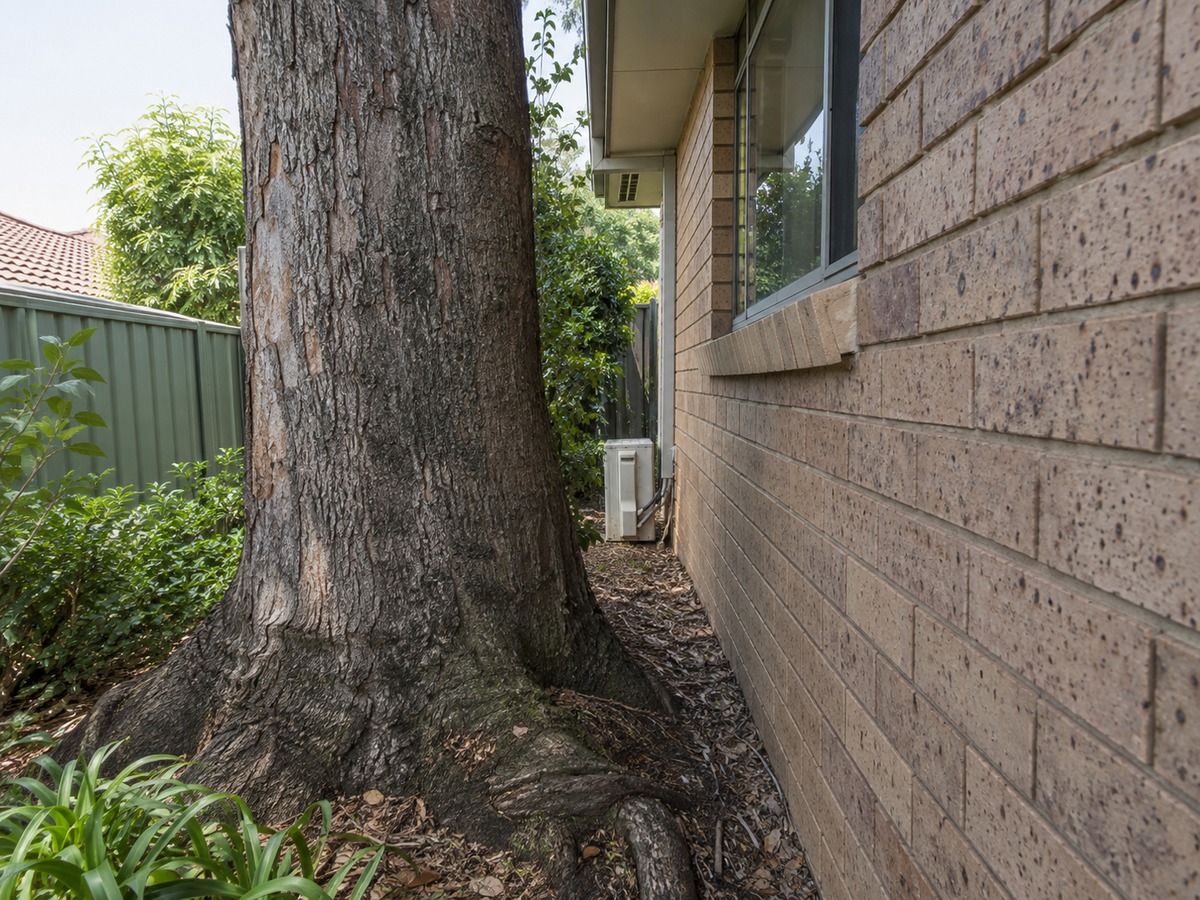
Where the centre of a tree's trunk is within 3 metres of the external wall of an approved dwelling, measured at 1.4 metres above ground, a permit is generally not required. This does not extend to a secondary dwelling.
10 / 20%
Exempt pruning limits
Up to 10 per cent of the crown of an indigenous tree or 20 per cent of an exotic tree over a 12-month period, with no branch greater than 150mm in diameter.
3:1
Replacement planting
Council's published private-tree guidance generally applies a 3:1 replacement ratio, three new trees for each tree removed, with officers able to vary the requirement according to the circumstances.
Council information last verified 3 September 2026. Requirements can change, so confirm current requirements for the individual property and proposed tree work.
Which approval path applies?
A general guide. The circumstances of the individual tree and property should be checked before work proceeds.
| Situation | Usually required |
|---|---|
| Remove a protected tree | Council approval unless an exemption applies |
| Tree less than 5m in height | Generally exempt under Council’s current published private-tree guidance, subject to other applicable controls |
| Tree within 3m of an approved dwelling | Generally exempt where the trunk centre is within 3m of the dwelling wall. Does not extend to a secondary dwelling |
| Selective pruning within Council limits | May be exempt, up to 10% of an indigenous tree or 20% of an exotic tree over 12 months, branches 150mm or less, subject to exclusions |
| Pruning outside the exemption limits | Council approval may be required |
| Dangerous tree presenting an imminent threat | Must satisfy Council’s imminent-threat exemption |
| Dying or dead tree | May be exempt where Council is satisfied the Chapter 2.3 conditions for dying or dead trees are met |
| Tree removal linked to development | Development Arborist Report or AIA pathway |
When is Council approval required?
Approval may be required where a protected tree is proposed for removal, where pruning exceeds Council's exempt limits, where the tree forms part of an approved landscape plan, where heritage, biodiversity or other planning controls apply, or where tree works form part of a Development Application.
Where approval is required, the basic pathway is to check exemptions, obtain arborist assessment where required, prepare the appropriate report, lodge the Council application, receive the determination and then carry out the approved works.
A permit is valid for 12 months from the date of issue, is issued to the site owner, and a copy must be kept on site and produced to a Council officer on request while the approved work is undertaken.
Common tree removal exemptions
Trees under 5 metres in height
Generally exempt from approval, subject to any other applicable controls. Trees on Council-managed public land remain protected under the Tree Management Order regardless of height, species or origin.
Trees within 3 metres of an approved dwelling
Where the centre of the trunk is within 3 metres of the external wall of an approved dwelling, measured at 1.4 metres above ground, a permit is generally not required. The exemption does not extend to a secondary dwelling.
Exempt tree species
Council lists certain species as exempt on land other than public land because of their weed status, undesirable characteristics or unsuitability for the private domain. Some species have specific conditions, so identification alone should not be treated as confirmation that every tree of that species is exempt.
Fruit trees and palm pruning
Recognised horticultural varieties of trees grown for fruit production are exempt. Council also separately exempts pruning of palms to remove fruit and dead fronds.
Other exemptions
These include trees approved for removal under a current Development Consent and certain tree works lawfully undertaken under specific legislation or court orders. Because exemptions depend on the circumstances, an exemption applying to one tree does not automatically apply to another tree on the same property.
Dangerous, declining and storm-damaged trees
A tree that looks dangerous, dead or declining is not automatically exempt from Council approval. To rely on Council's imminent-threat exemption, the property owner must be able to demonstrate to Council's satisfaction that pruning or removal is the only reasonable option to avoid an imminent threat to human life or property. That is a higher threshold than a tree simply being declining, defective or concerning.
Chapter 2.3 separately provides an exemption for a dying or dead tree where Council is satisfied that the tree is dying or dead, its condition is not the result of tree vandalism or a breach of Chapter 2.3, and the tree is not required as habitat for native fauna. Where those conditions are not clearly established, check the applicable Council pathway before undertaking removal.
Where the level of risk is uncertain, an AQF Level 5 Consulting Arborist can assess the tree and document its condition and the arboricultural basis for the recommended action. Storm-damaged trees should also be documented where practical, particularly where Council requirements or insurance evidence may be relevant.
Tree pruning rules
Some selective pruning can be undertaken without Council approval where all requirements of the pruning exemption are satisfied. Council's exempt selective-pruning limits are up to 10 per cent of the crown of an indigenous tree over a 12-month period, up to 20 per cent of the crown of an exotic tree over the same period, and no branch greater than 150mm in diameter.
The pruning must comply with AS 4373-2007, Pruning of amenity trees, and remain within the pruning classes permitted by Council. These include crown-maintenance work such as deadwooding, crown thinning and selective pruning, together with permitted crown-modification work such as reduction pruning, crown lifting, remedial pruning and line clearance.
When the pruning exemption does not apply
- Trees protected under relevant biodiversity legislation
- Trees forming part of an Endangered Ecological Community
- Sites listed as a heritage item under the Canterbury-Bankstown LEP 2023
- Land included on Council’s Biodiversity Map
- Trees within a conservation corridor
- Trees within the foreshore area under the LEP 2023
Where proposed pruning exceeds the exempt limits or falls outside the permitted pruning classes, Council approval may be required.
What report do I need?
The appropriate arboricultural documentation depends on why the tree is being assessed.
Standalone removal or risk concerns
A Tree Removal Report or Tree Health and Safety Assessment may be appropriate where Council requires professional evidence about tree condition, structural defects, risk or the arboricultural basis for removal.
Development-related tree impacts
Where tree removal or retention forms part of proposed development, the appropriate pathway is generally a Development Arborist Report or Arboricultural Impact Assessment rather than a standalone removal report.
Further below-ground investigation
Where development or infrastructure interacts with tree roots and their actual location needs to be established, Tree Root Investigation and Mapping may be appropriate.
Replacement tree requirements
Where Council approves removal, the permit may require replacement or offset planting and may specify the number, size, species or other planting requirements. Replacement planting is generally required within 28 days of the approved removal works unless Council specifies otherwise.
Council's separate published guidance for private trees generally applies a 3:1 replacement ratio, three new trees for each tree removed, with Council officers able to vary the requirement according to the circumstances of the property. The conditions stated in the individual determination should always be followed.
Reasons Council generally does not accept
Council considers the tree's condition, suitability, landscape and environmental contribution, impacts on the property and infrastructure, amenity, heritage significance and other relevant circumstances when determining an application. Normal tree characteristics or minor inconvenience do not automatically justify removal. Matters Council identifies as generally not accepted on their own include:
- Wildlife such as spiders, insects or birds
- Leaves falling into gutters, pools, lawns or paving
- Seasonal shading
- Fruit, sap or bird droppings
- Minor lifting of fences, pathways, garden edging or carport slabs by roots
- Wanting to remove a tree simply to make way for a fence, carport, BBQ or similar structure
Council may refuse an application in full or in part. Where an application is refused, an appeal may generally be lodged within three months of the determination on the grounds identified by Council, including that the decision was made in error, is harsh or unreasonable, or that additional information has become available. Supporting evidence from an appropriately qualified consultant may be required depending on the basis of the appeal.
Unauthorised tree work can also result in enforcement action and significant penalties, so the approval or exemption pathway should be established before work begins.
Frequently asked questions
If your question is not here, send us the details and we will tell you what applies.
Do I need Council approval to remove a protected tree?
Generally, yes, unless a specific exemption under Chapter 2.3 applies. Common exemptions include the under-5-metre exemption, the 3-metre dwelling provision, exempt species and genuinely imminent threats.
Can I remove a dead tree without Council approval?
A dying or dead tree may be exempt where Council is satisfied that the tree is dying or dead, the condition was not caused by tree vandalism or a breach of Chapter 2.3, and the tree is not required as habitat for native fauna. Where those conditions are unclear, we can assess the tree and help confirm the applicable pathway.
Can I prune overhanging branches without Council approval?
Not automatically. The selective-pruning exemption is subject to crown-percentage limits, a maximum branch diameter of 150mm, permitted pruning classes and exclusions relating to the tree and the property.
Can I remove a dangerous tree immediately?
Only where the circumstances satisfy Council’s imminent-threat exemption. The owner must be able to demonstrate to Council’s satisfaction that removal or pruning is the only reasonable option to avoid an imminent threat to human life or property.
What report do I need for tree removal?
It depends on the reason for removal. A Tree Removal Report or Health and Safety Assessment may be appropriate for standalone tree issues, while development-related removal generally follows the Development Arborist Report or AIA pathway.
Official Council sources
- Canterbury-Bankstown Development Control Plan 2023, Chapter 2.3
Council’s Tree Management Order covering tree controls, exemptions, permits and related provisions.
- Canterbury-Bankstown Council, Private Trees
Council information about private-tree exemptions, permit applications and replacement planting.
- Canterbury-Bankstown Council, Trees and Development
Official information for trees affected by development.
Official source links checked 3 September 2026.
Related pages
Where we work
We prepare Tree Removal Reports and Tree Pruning Reports throughout the Canterbury-Bankstown Local Government Area, across the Darani / Bankstown, Bura / Bass Hill, Budjar / Canterbury, Bunya / Revesby and Bunmarra / Roselands wards.
Not sure which arborist report you need?
Send us your plans, Council correspondence or photographs of the tree. Our AQF Level 5 Consulting Arborists can identify the appropriate assessment, explain the next step and provide a fixed quote before work begins.