Canterbury-Bankstown Development Application Tree Rules & Guidelines
How Council assesses trees as part of your Development Application, including AIA requirements, TPZ and SRZ rules and where arboricultural assessment fits into the DA process.
Where proposed development may affect trees on your property, adjoining land or Council-managed land, Canterbury-Bankstown Council may require arboricultural information to assess the proposal. Council also recommends involving an AQF Level 5 Consulting Arborist during the design process where existing trees need to be considered.
Planning standalone tree removal or pruning rather than a Development Application? See the Canterbury-Bankstown tree removal and pruning guidelines instead.
- AQF Level 5 Consulting Arborists
- 32+ years arboricultural experience
- Council-ready documentation
- AS 4970-2025 assessment
When may Council require an AIA?
An Arboricultural Impact Assessment may be required where existing trees could be affected by proposed development. This can include trees on the development site, on adjoining properties, or on streets and other Council-managed land.
An AIA may also be required where buildings, basements, retaining walls, driveways, excavation, changes to ground levels, services or required pruning could affect retained trees. Early arboricultural assessment can identify tree constraints before architectural and engineering designs are completely finalised.
Where Council has already requested an AIA or further tree information, send us the Council correspondence and current plans so the required arboricultural documentation can be identified.
Street trees and other Council trees
Development assessment is not limited to trees inside the property boundary. Neighbouring trees, street trees and other Council-managed trees may also need assessment where their canopies or root zones could be affected by demolition, excavation, access, services or construction.
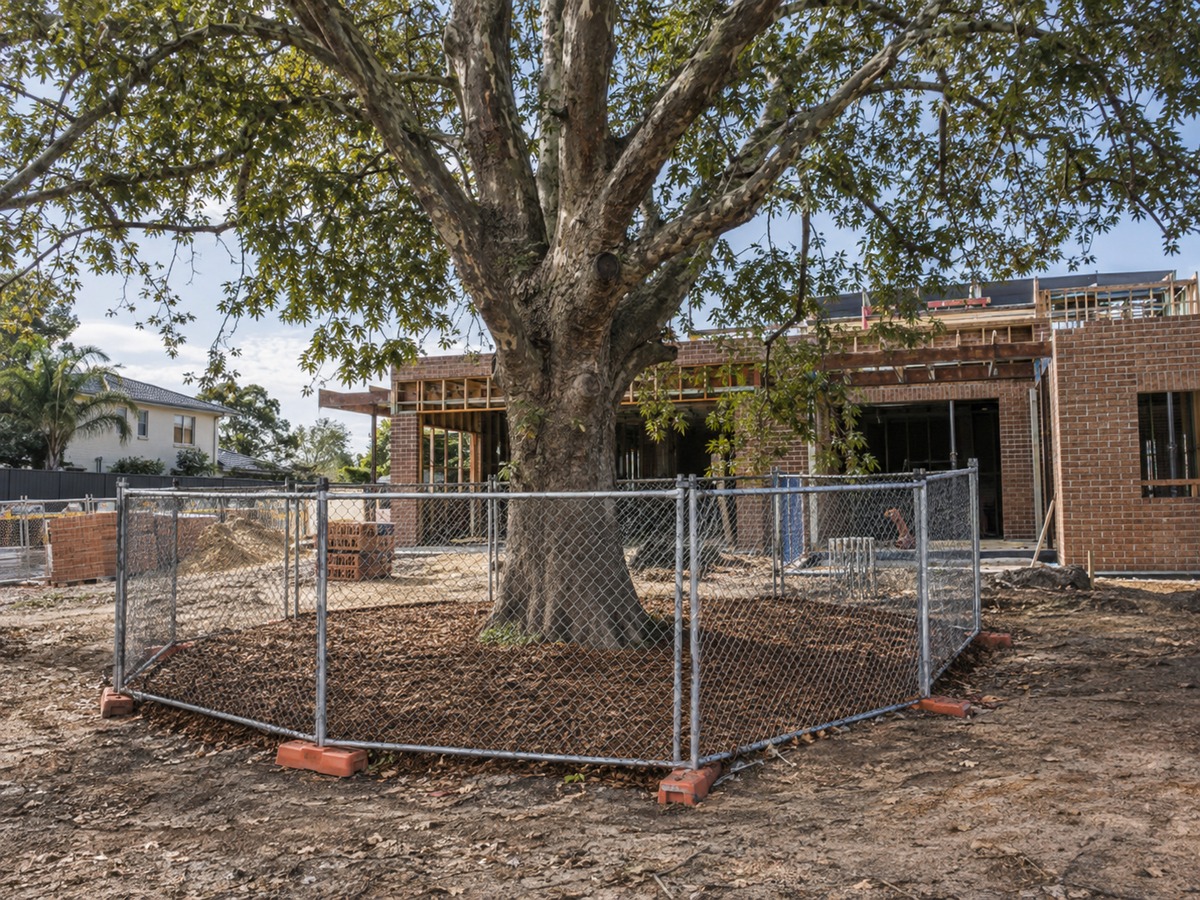
Where public trees are retained, Council may require tree-protection measures during development, including Tree Protection Zone fencing, ground protection, trunk or branch protection, controlled site access and arboricultural supervision where required.
Where standard protection arrangements cannot be achieved because of site constraints, an AQF Level 5 Consulting Arborist may need to develop appropriate alternative protection measures and provide construction-stage supervision.
What Council expects in an Arboricultural Impact Assessment
A well-prepared AIA should identify the trees relevant to the development, assess their condition and retention value, and explain how the proposed works may affect them.
Site and report details
The site, inspection date and development proposal being assessed, together with the arborist’s relevant qualifications, experience and professional details.
Tree identification and survey
Tree numbers, scientific and common names, trunk dimensions, height, crown spread and other relevant information.
Health and structural condition
Vitality, structural defects, pests, disease, previous damage and factors relevant to retention.
Site history
Relevant previous pruning, excavation, soil-level changes or construction activity.
Assessment methodology
Council uses Tree AZ for assessment of trees on development sites and states reports should reference this methodology or use a similar and interchangeable tree-assessment system.
NRZ, TPZ and SRZ assessment
Relevant root and protection zones considered against the proposed development.
Development impacts and encroachment
Buildings, excavation, driveways, services, retaining walls, level changes, pruning and other works capable of affecting trees.
Retention or removal recommendations
Evidence-based recommendations explaining whether trees can reasonably be retained and protected or whether removal is proposed.
Habitat considerations
Relevant hollows, nesting sites, shelter habitat or other fauna considerations identified during assessment.
Further investigation
Root mapping, aerial inspection or non-destructive investigation where visual assessment alone is insufficient.
Tree protection and mitigation
Practical measures to reduce impacts on retained trees, plus photographs and plans clearly identifying the trees and their relationship to the development.
Replacement planting
Where removal is recommended and replacement planting is relevant to the determination.
Council may request additional information depending on the complexity of the development. The AIA should assess the current architectural and engineering drawings so tree impacts are considered against the proposal Council will determine.
How NRZ, TPZ and SRZ work under AS 4970-2025
AS 4970-2025, Protection of trees on development sites, is the current standard Canterbury-Bankstown Council refers to when assessing and setting conditions for trees affected by development. Three important areas may need to be considered.
Notional Root Zone
The NRZ provides the initial calculated root-zone area used when assessing potential development impacts. It is calculated from trunk diameter, subject to the minimum and maximum dimensions provided by the standard.
Tree Protection Zone
The TPZ is the area established to protect a retained tree during development. The final TPZ considers the tree, site, proposed works and arboricultural assessment. Protection measures may include fencing, ground protection, access restrictions, excavation controls and specific construction methodologies.
Structural Root Zone
The SRZ is the particularly sensitive area around the tree associated with roots required for structural stability. Encroachment into the SRZ requires careful arboricultural consideration because root disturbance can have implications for tree stability.
Assessing encroachment
Encroachment is assessed according to its extent, location and relationship to the tree. The numerical extent alone does not determine whether a proposal is acceptable. The Consulting Arborist also considers:
- Species
- Tree condition
- Likely root distribution
- Site constraints
- Proposed construction methodology
- Whether impacts can be mitigated
Where actual root location is critical, non-destructive root investigation may provide more reliable site evidence than calculated zones alone.
Where tree assessment sits in the DA process
Keeping the arboricultural work coordinated through these stages helps ensure that recommendations made during DA assessment are carried through into construction.
Concept design
Ideally, trees are considered before the building footprint, driveway, basement, retaining walls and services are completely finalised, so significant constraints can be identified while the design can still be adjusted.
Arboricultural Impact Assessment
Once the proposal is sufficiently developed, the AIA assesses the current design and its potential impacts on relevant trees. Where significant conflicts are identified, the arborist can work with the architect, engineer or other consultants on modifications or mitigation.
DA lodgement
The AIA and associated tree plans are submitted with the Development Application where required.
Council assessment
Council assesses the arboricultural information alongside the architectural, planning and other supporting documentation, and may request additional information.
Development Consent
Where the DA is approved, tree retention, protection, pruning, removal and replacement requirements may become conditions of consent.
Construction
Required tree-protection measures are established before relevant demolition or construction begins. Where the consent requires ongoing arboricultural involvement, a Project Arborist undertakes inspections, supervises sensitive works and provides compliance documentation.
Frequently asked questions
If your question is not here, send us the details and we will tell you what applies.
Do I need an AIA for every Development Application?
No. The documentation required depends on the trees present, the proposed development and Council’s assessment requirements. Where trees on the site, neighbouring land or Council property could be affected, arboricultural assessment may be required.
Is an AIA the same as a Development Arborist Report?
An Arboricultural Impact Assessment is a specific form of development-related arborist report. For many Development Applications involving trees, the Development Arborist Report takes the form of an AIA. The exact documentation required depends on the proposal and Council’s requirements.
What edition of AS 4970 does Canterbury-Bankstown Council refer to?
Council’s current Trees and Development guidance refers to AS 4970-2025, Protection of trees on development sites. Our development-related arboricultural documentation is prepared with reference to the current standard and applicable Council requirements.
When should I involve an arborist?
Ideally before the development design is completely finalised. Early assessment can identify tree constraints while there is still an opportunity to modify building footprints, excavation, driveways, services or other elements of the proposal.
What if Council asks for more arboricultural information?
Send us Council’s request, current architectural plans and any existing arborist documentation. We can review the material and identify what additional assessment, investigation or reporting is required.
Official Council sources
- Canterbury-Bankstown Council, Trees and Development
Official Council information about AIA requirements, tree assessment methodology and development tree protection.
- Canterbury-Bankstown Council, Tree Management Order
Official Council requirements relating to trees and tree management.
- Canterbury-Bankstown Development Control Plan 2023
Council’s development controls.
Official source links checked 3 September 2026.
Related pages
Council requirements can change. Project-specific requirements should be confirmed against current Council information, the Development Consent and approved plans. Official source links checked 3 September 2026.
Not sure which arborist report you need?
Send us your plans, Council correspondence or photographs of the tree. Our AQF Level 5 Consulting Arborists can identify the appropriate assessment, explain the next step and provide a fixed quote before work begins.