Tree Pruning Canterbury-Bankstown
AQF Level 5 Arborist Reports, Council permit support and professional tree pruning.
Before pruning begins, we establish whether the tree is protected under Canterbury-Bankstown Council's tree controls, whether an exemption applies, and whether Council approval or supporting arboricultural evidence is required.
If you have simply been told you need a tree report before pruning can proceed, send us the Council request or photographs of the tree. Once the appropriate approval or lawful exemption pathway has been established, professional tree pruning can proceed.
- AQF Level 5 Consulting Arborists
- Professional tree pruning
- 32+ years arboricultural experience
- Council permit support
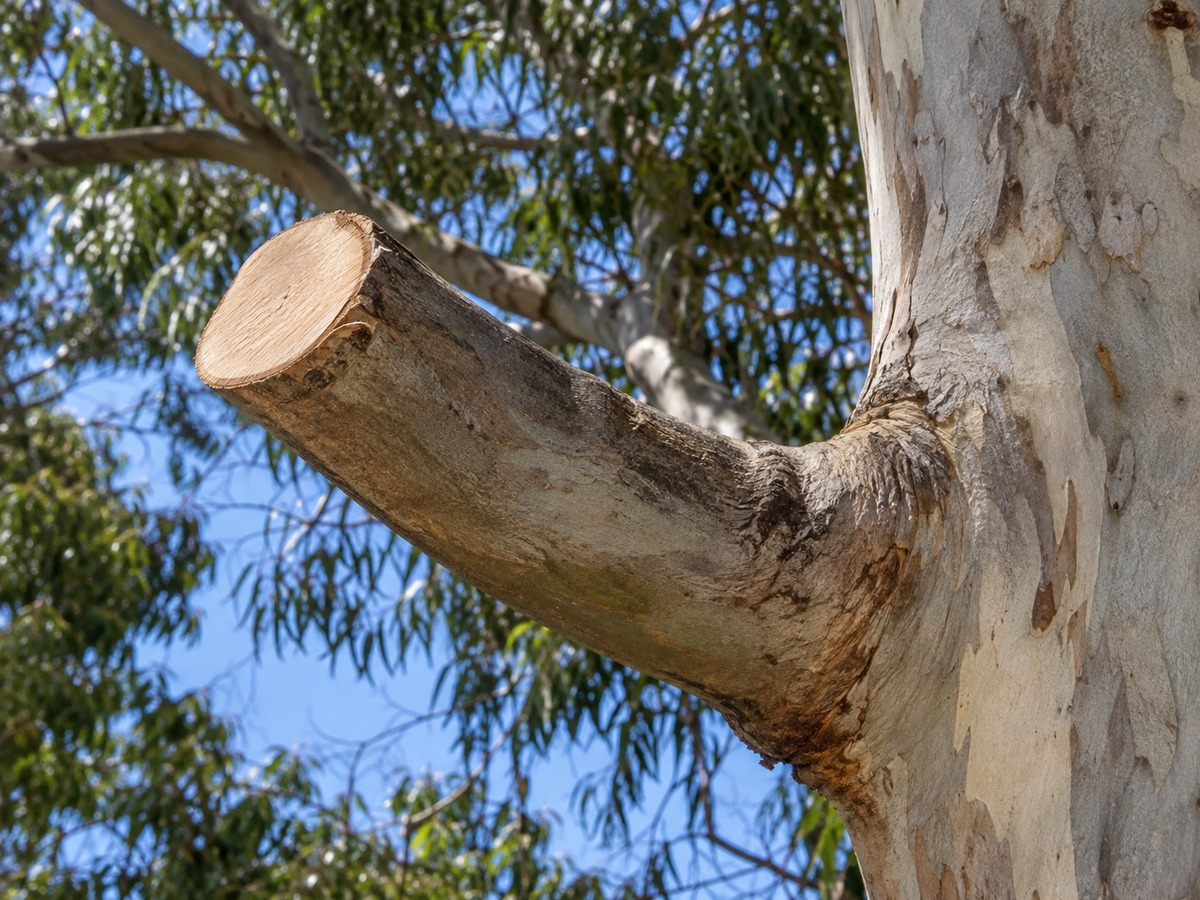
Do I need Council approval to prune a tree?
Council approval is generally required to prune a protected tree unless an exemption applies. Under Council's current requirements, approval may not be required where:
- The tree is less than 5 metres in height
- The centre of the trunk is within 3 metres of a wall of the primary dwelling, not a verandah, measured at 1.4 metres above ground
- The tree species appears on Council’s exempt species list
The 3-metre dwelling exemption does not extend to garages, sheds or granny flats. Other exemptions may apply. If your situation does not clearly meet an exemption, the appropriate pathway should be established before pruning begins.
Council also identifies some commonly requested reasons for pruning that are generally not sufficient on their own, including seasonal shading over lawns or gardens and normal leaf, fruit or sap drop. Pruning associated with development may instead need to be considered as part of the Development Application.
Can I prune a Council street tree?
Street and park trees are managed by Canterbury-Bankstown Council. Property owners should not arrange pruning of a Council tree themselves. Where a public tree requires pruning for building clearance, safety, access or another reason, the appropriate pathway is to request assessment by Council.
Who carries out approved pruning?
Different qualifications apply to different stages. Where a Tree Pruning Report or professional arboricultural evidence is required, this is prepared by an AQF Level 5 Consulting Arborist. Council requires pruning or removal carried out under a permit to be performed by an arborist holding at least an AQF Level 3 qualification in Arboriculture, and specifically distinguishes appropriately qualified arborists from unqualified tree loppers.
Our tree crews are qualified to at least AQF Level 3, allowing the approved scope identified in the Arborist Report or permit to be carried through by appropriately qualified arborists.
Our tree pruning process
Check the pathway, report where required, approval where required, then the pruning.
Check the Council pathway
We assess the tree species, size, location, condition, proposed pruning and site circumstances against the applicable Council controls. Where an exemption applies, this can be identified before unnecessarily proceeding through a Council approval process.
Tree report where required
Where professional arboricultural evidence is required, an AQF Level 5 Tree Pruning Report can document the tree, why pruning is proposed and the recommended scope of work.
Council approval where required
Where Council approval is necessary, the Arborist Report can provide supporting arboricultural evidence for the relevant application or approval pathway.
Tree pruning
Once any required approval has been obtained, or an applicable lawful exemption has been established, our professional tree crews can undertake the pruning in accordance with the approved or appropriate scope.
When is an AQF Level 5 tree pruning report needed?
Professional arboricultural evidence may be appropriate where proposed pruning involves significant canopy reduction, structural pruning, building or property clearance, overhanging branches, defective or damaged limbs, storm damage, tree safety concerns, trees associated with a Development Application, or a Council request for arboricultural information.
Our AQF Level 5 Consulting Arborists assess whether pruning is appropriate and specify work that addresses the identified issue while considering the tree's health and structural condition.
What does a tree pruning report include?
- Tree identification and species
- Tree dimensions
- Health and structural condition
- Observable defects
- Reason pruning is proposed
- Branches or canopy areas affected
- Recommended pruning specifications
- Photographic evidence
- AS 4373 pruning specifications
- Arboricultural recommendations
Each report is prepared for the individual tree and proposed work rather than relying on a generic pruning specification. It gives Council a clearly defined scope of proposed pruning and gives the arborist carrying out the work an appropriate specification.
What type of pruning may be appropriate?
The appropriate method depends on the individual tree, its condition and the objective of the work.
Deadwood removal
Removal of dead or failed branches where appropriate for tree management or safety.
Selective reduction
Reducing specific branches or parts of the canopy rather than indiscriminately reducing the entire tree.
Weight reduction
Selective pruning to reduce loading on particular limbs or structurally significant areas where arboriculturally appropriate.
Clearance pruning
Selective pruning to provide appropriate clearance from buildings, structures, services or other targets.
Structural or corrective pruning
Selective pruning intended to manage structural issues or developing defects where appropriate.
Storm-damage pruning
Removal or management of damaged branches following storms or other branch failures where the remaining tree is suitable for retention.
Pruning recommendations should respond to the actual tree and the reason for intervention rather than applying a standard percentage reduction to every tree.
Pruning in accordance with AS 4373
Our pruning recommendations are prepared in accordance with AS 4373, Pruning of amenity trees, and Canterbury-Bankstown Council's applicable tree-management requirements. Appropriate pruning considers the tree's species, condition, structure and likely response to canopy removal.
The objective is to address the identified issue while retaining as much healthy, functional canopy as reasonably possible. Poor practices such as indiscriminate lopping, topping or excessive canopy removal can damage trees and create future structural problems. Where Council has approved a particular pruning specification, the work should remain within that approved scope.
Pruning or removal?
Not every tree problem requires removal. Where a tree remains viable and an identified problem can reasonably be managed through appropriate pruning, retention may be possible.
Conversely, pruning should not be recommended merely as an alternative to removal where advanced decay, significant structural defects, compromised stability or other conditions cannot reasonably be managed through pruning. The appropriate recommendation should follow assessment of the individual tree.
Pruning a dangerous or structurally compromised tree
Sometimes the issue is more than routine pruning. A tree may have failed or hanging branches, significant deadwood, cracks or structural defects, decay, weak branch attachments, storm damage or excessive loading on compromised limbs.
Where a tree has damaged or defective limbs but is not an immediate emergency, a Tree Health and Safety Assessment can help determine whether appropriate pruning can manage the issue. Where visual assessment does not provide sufficient evidence, advanced structural or decay investigation may also be appropriate.
Tree pruning for a Development Application
Pruning associated with a Development Application is different from ordinary private-property pruning. Where pruning is proposed to accommodate a building envelope, driveway, access, services or other development works, it may need to be assessed as part of the broader Arboricultural Impact Assessment rather than treated as a standalone tree-pruning application.
Frequently asked questions
If your question is not here, send us the details and we will tell you what applies.
Do I need Council approval to prune a tree in Canterbury-Bankstown?
Possibly. Council approval is generally required to prune a protected tree unless an exemption applies. Common exemptions include trees under 5 metres, certain trees within 3 metres of the primary dwelling and listed exempt species.
Will Council approve pruning because of shade, leaves or other nuisance issues?
Generally, not on those reasons alone. Council specifically identifies seasonal shading and normal leaf, fruit or sap drop as reasons that are not generally sufficient by themselves to justify pruning.
Do I need an AQF Level 5 arborist report?
Not every pruning job requires one. Where Council requires professional arboricultural evidence, an AQF Level 5 Tree Pruning Report can document the tree, the proposed work and appropriate pruning specifications.
Does the person doing the pruning need to be AQF Level 5?
No. Assessment and reporting are undertaken by an AQF Level 5 Consulting Arborist. Canterbury-Bankstown Council requires pruning or removal undertaken under a permit to be performed by an arborist holding at least an AQF Level 3 qualification in Arboriculture.
Can you prepare the report and prune the tree?
Yes. We provide AQF Level 5 Arborist Reports where required and professional tree pruning, so the process is coordinated from assessment through approval and approved tree work.
Can pruning avoid removing a tree?
Often, yes. Appropriate pruning can sometimes manage clearance, defective limbs, loading or other concerns while allowing a tree to be retained. Where pruning will not provide an appropriate long-term outcome, we explain the available alternatives.
Can I prune a Council street tree?
No. Street and park trees are managed by Canterbury-Bankstown Council, and property owners should not arrange pruning of a Council tree themselves. Where a public tree requires pruning for building clearance, safety or access, the appropriate pathway is to request assessment by Council.
Tree pruning throughout Canterbury-Bankstown
Pruning assessments, AQF Level 5 reports, Council permit support and professional pruning across all five wards.
Darani / Bankstown Ward
Bankstown, Chullora, Greenacre, Mount Lewis and part of Punchbowl. Enquiries can involve mature trees on established residential properties, trees close to houses and boundaries, building-clearance requirements and trees requiring structural or safety-related pruning.
Bura / Bass Hill Ward
Bass Hill, Birrong, Chester Hill, Condell Park, Georges Hall, Lansdowne, Potts Hill, Regents Park, Sefton, Villawood and Yagoona. Matters can involve established residential properties, mature trees, clearance requirements, overhanging branches and trees where the appropriate pruning scope requires professional assessment.
Budjar / Canterbury Ward
Ashbury, Belfield, Campsie, Canterbury, Clemton Park, Croydon Park, Earlwood and Hurlstone Park. Established residential areas where mature trees occur close to houses, neighbouring properties and existing structures. Enquiries can involve clearance, canopy management, structural concerns and retaining mature trees within constrained sites.
Bunya / Revesby Ward
East Hills, Milperra, Padstow, Padstow Heights, Panania, Picnic Point, Revesby and Revesby Heights. Matters can involve mature residential trees, larger properties, storm-damaged trees, structural concerns and trees on properties influenced by bushland and river environments.
Bunmarra / Roselands Ward
Belmore, Beverly Hills, Kingsgrove, Lakemba, Narwee, Riverwood, Roselands, Wiley Park and part of Punchbowl. Enquiries can involve mature trees close to buildings and boundaries, clearance requirements, neighbour-tree concerns, redevelopment and trees requiring structural or canopy assessment.
Official Council sources
- Canterbury-Bankstown Council, Tree Management Order
Official Council requirements relating to trees and tree management.
- Canterbury-Bankstown Council, Private Trees
Exemptions, permits and replacement planting for trees on private land.
Official source links checked 3 September 2026.
Related pages
Council information last verified 3 September 2026. Requirements can change, so confirm with Canterbury-Bankstown Council for property-specific advice.
Not sure which arborist report you need?
Send us your plans, Council correspondence or photographs of the tree. Our AQF Level 5 Consulting Arborists can identify the appropriate assessment, explain the next step and provide a fixed quote before work begins.